
Like much of western Nebraska, drought at the Gudmundsen Sandhills Laboratory was the main concern for the start of the 2026 growing season. Precipitation during the previous fall and winter (Oct. - March) was only 38% of the long-term average (Table 1). April and May precipitation was only 32% of the long-term average. According to the NOAA National Centers for Environmental information, the Palmer Drought Severity Index (PDSI), a standardized measure of long-term drought that estimates the balance between precipitation and evapotranspiration to indicate relative wetness or dryness over time, was at its lowest value (extreme drought; -6.67) during the month of May since 1895 for Grant County, Nebraska (Fig. 1). June continued to be very dry until a June 30 storm, which brought 3.10 inches and increased the monthly total to 5.20 inches (Table 1).
Since 2007, we have sampled plant biomass production in mid-June from upland sands ecological sites east of the ranch headquarters. This is done by clipping all vegetation and standing dead plant material in a ¼ m frame at ground level. Vegetation is separated into warm-season grass, cool-season grass, forb, shrub, and sedge functional group categories. Plant material is then dried and weighed. From our 2026 mid-June sampling, total forage production was only 335 lb/acre (Fig. 2), or 32% of the long-term average for June.
Table 1. GSL Precipitation (Inches)
Month | Average | 2025 - 2026 | 2025 - 2026 Cumulative |
Oct. - March | 3.66 | 1.39 | 1.39 |
April | 2.05 | 0.62 | 2.01 |
May | 3.32 | 1.09 | 3.10 |
June | 3.43 | 5.20 | 8.30 |
July | 3.07 |
|
|
August | 2.19 |
|
|
September | 1.74 |
|
|
Total | 19.46 |
|
|
Individual plant functional group values are below:
- Cool-season grasses: 94 lb per acre or 22% of the average for June
- Warm-season grasses: 148 lb per acre or 37% of the average for June
- Forbs: 47 lb per acre or 46% of the average for June
- Shrubs: 30 lb per acre or 76% of the average for June
- Sedges: 17 lb per acre or 21% of the average for June
The late June rainfall will have some benefit to the warm-season grasses, but the amount of growth will likely be limited. Overall, total production for the 2026 season will be well below average. Continued monitoring and conservative stocking rates are recommended as we work through this exceptional drought period.
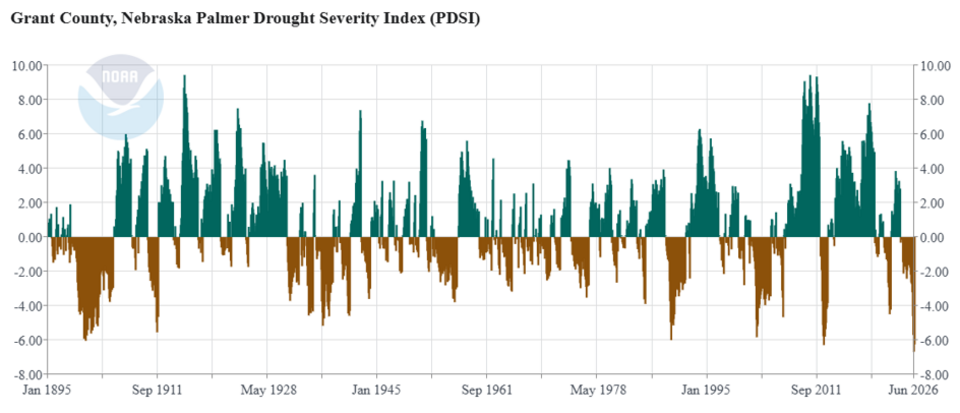
Figure 1: Grant County, NE, Palmer Drought Severity Index

Figure 2: Mid-June upland plant production at GSL from 2007-2026