
What a year this has been! After a mild winter, calving in our March herd progressed well. Among mature cows, 89% calved within the first 21 days, compared with 94.8% of 2-year-olds and 77.8% of 3-year-olds. May heifers had 93.8% calve in the first 21 days. May cows had 85% while May 3-year-olds had 90% calve in the first 14 days.
After an abnormally warm and dry winter and spring, drought management plans were put in motion. Part of that plan involved selling late calving May cows. These decisions are never easy, but making reductions that minimize impacts to ongoing research complicates things further. Reductions were made to all studies. Yearlings that would have normally stayed on grass until August were moved to the feedlot in May. A total reduction of 21% of our historical June 1 cattle inventory was made.
Early June 2026 range diets collected from esophageally fistulated cows averaged 10.7% crude protein (CP) and 57.6% total digestible nutrients (TDN), both below the long-term averages of 12.2% CP and 61.5% TDN. In contrast, June meadow diets averaged 13.8% CP and 65.6% TDN, closely matching long-term averages of 14.0% CP and 65.0% TDN.
June biomass measurements indicated total plant production of 335 lb/acre, representing only 32% of average June production.
Although diet samples were collected from ungrazed pastures, the combination of limited forage production and below-average forage quality suggests that diet quality is likely to decline rapidly as grazing pressure increases over time. With both forage quantity and quality below normal, concerns were raised regarding cow rebreeding performance and calf weight gains.
Calves from March young and mature cows are normally weaned Oct. 1, while calves from mature cows are normally weaned Nov. 1, respectively. Early weaning of March calves was considered, but after rainfall in late June and early July, the decision was made to wait. September weaning may be an option if continued drought limits forage availability.
Strategic supplementation may be used while cattle are on low-quality range. The decision on whether to wean May calves early will be based on precipitation and forage availability in early fall.
We have been fortunate to have Madison Woehrle and Kevin Zamudio-Arambula at GSL as summer interns. We wish them the best as they return to classes this fall. We are also welcoming Kristobal Vizcarra to the GSL crew this August. Kristobal is coming to us after finishing a degree at the University of California, Davis. We are excited to have him join the team.
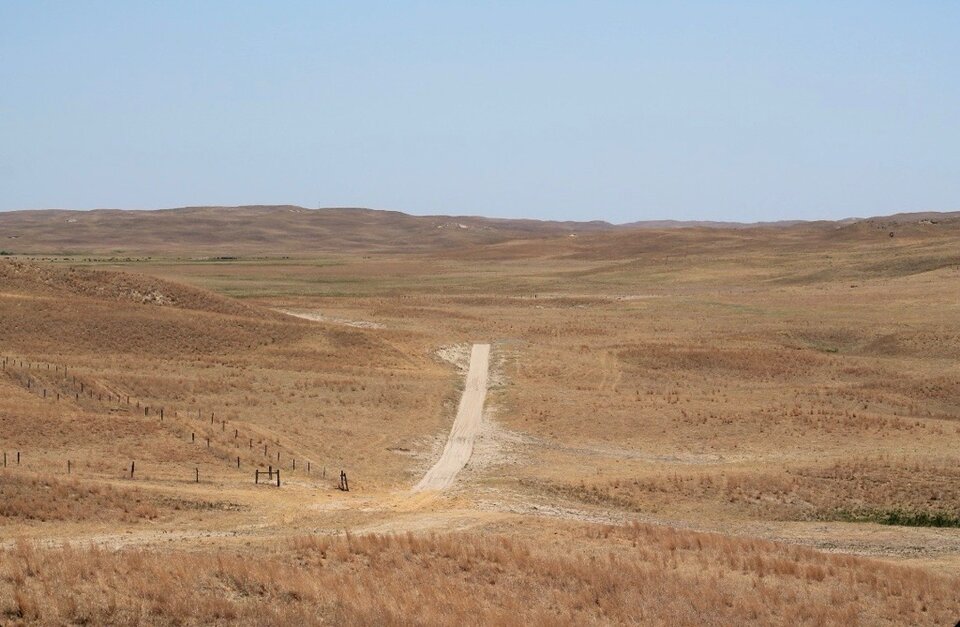
July 2012 Range at GSL
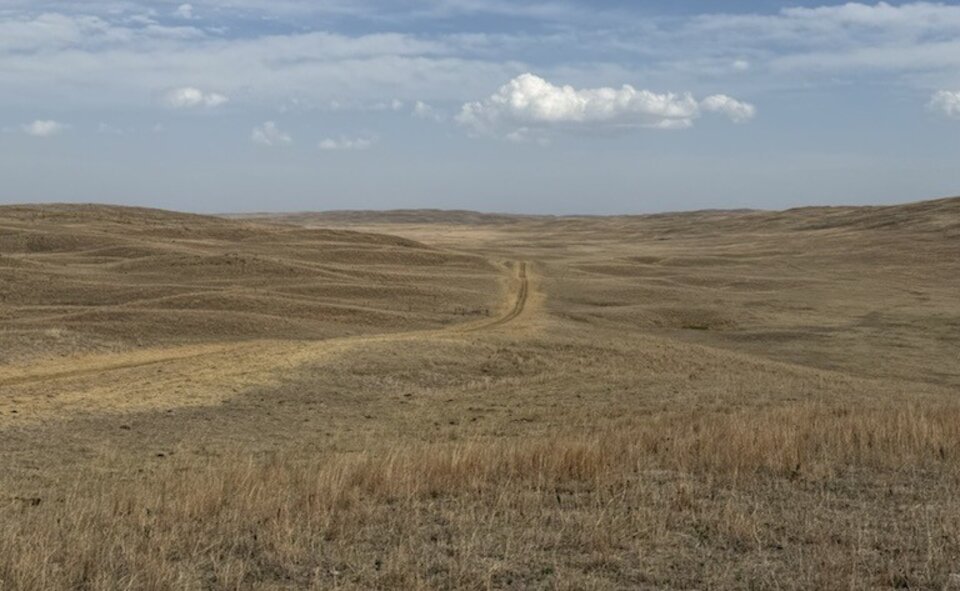
May 2026 Range at GSL